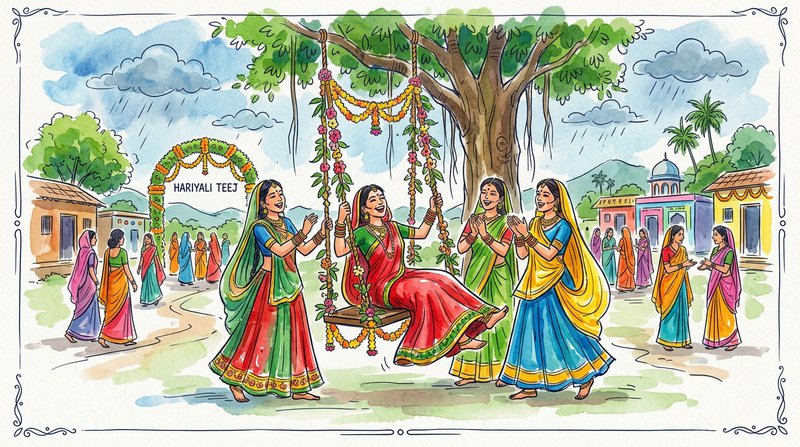
Hariyali Teej is a monsoon festival celebrated mainly across North and parts of Central India, especially by women, to honour Goddess Parvati and Lord Shiva and to celebrate the green renewal that arrives with the rains. The word Hariyali means greenery—so the festival naturally becomes a celebration of rain, fertility, and the joy of nature turning lush again. (astroshastra.com)
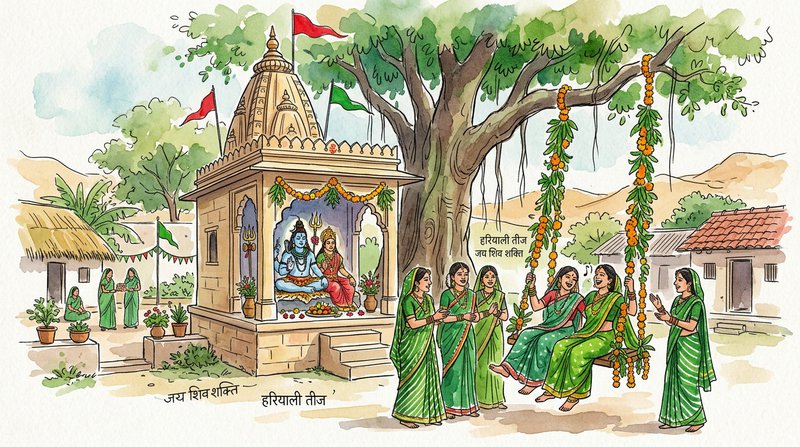
At its heart, Hariyali Teej remembers the devotion of Parvati and her reunion with Shiva—a story that many families pass down through songs, vrat katha, and community gatherings. (drikpanchang.com)
Hariyali Teej date in 2026
Hariyali Teej in 2026 falls on Saturday, August 15, 2026. (drikpanchang.com)
Because Hindu festival dates are based on the lunar tithi (lunar day) and the “festival day” is typically taken from sunrise-to-sunrise, the exact fasting/puja window can vary by location (including outside India). For example, one widely used Panchang calculation for Naperville, United States lists Tritiya tithi from 8:16 AM (Aug 14, 2026) to 6:58 AM (Aug 15, 2026) local time, while still observing Hariyali Teej on Aug 15. (drikpanchang.com)
What Hariyali Teej actually commemorates
Hariyali Teej is observed on Shukla Paksha Tritiya (the third lunar day of the bright/ waxing fortnight) in the month of Shravana (Sawan). That “third day” connection is also why the wider cluster of festivals is called “Teej” (linked with Tritiya). (drikpanchang.com)
The most common devotional meaning is:
- Parvati’s long tapasya (penance) and steadfast love
- Shiva accepting Parvati as his consort
- A blessing for marital harmony, emotional resilience, and prosperity (drikpanchang.com)
Why it is called Hariyali Teej (and why green matters)
Green dominates Hariyali Teej because it mirrors the landscape in peak monsoon: fields revive, trees fill out, and life feels possible again. In many communities, wearing green is also a symbolic prayer for abundance, fertility, and well-being. (astroshastra.com)
That’s why you’ll often see:
- Green sarees/suits, green bangles, green dupattas
- Green-themed decorations
- Folk songs that describe clouds, rain, reunion, and love (timesofindia.indiatimes.com)
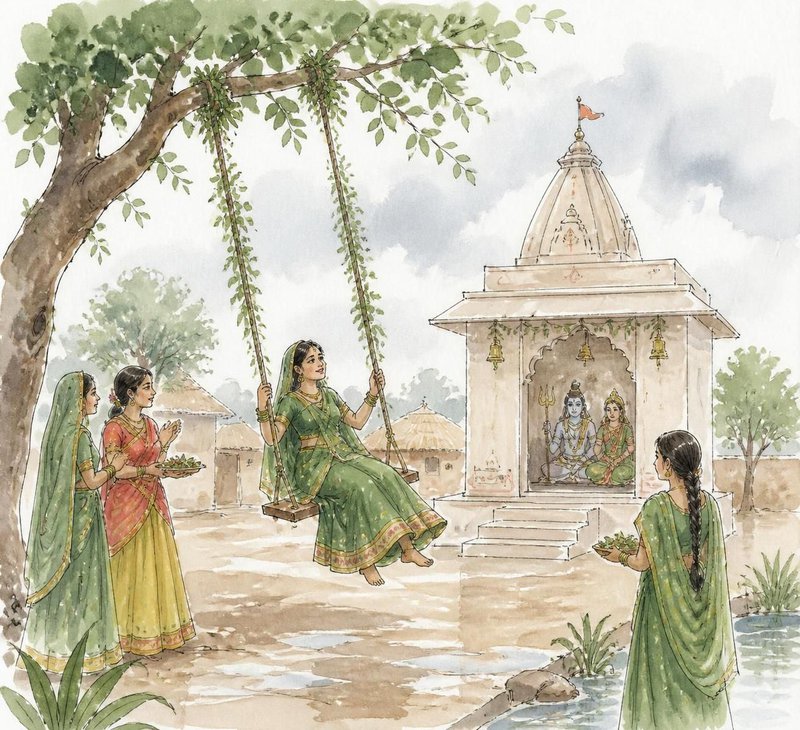
How Hariyali Teej is celebrated (step-by-step)
Customs vary by region and family tradition, but the festival usually includes the same core elements. (drikpanchang.com)
1) Vrat (fasting)
Many married women observe a nirjala vrat (fasting without water), praying for their husband’s long life and the strength of the marriage. Unmarried women may also fast, praying for a partner like Shiva or for a harmonious married life in the future. (timesofindia.indiatimes.com)
2) Shiva–Parvati puja
Homes and temples host Shiva–Parvati worship with flowers, sweets, and traditional offerings (often including bilva leaves in Shiva worship, depending on local custom). The focus is devotion, gratitude, and renewal. (timesofindia.indiatimes.com)
3) Mehndi and solah shringar
Applying mehndi and dressing up in festive finery is not “just decoration”—it’s part of the celebratory identity of Teej. It’s also one reason the festival feels so communal: women often apply mehndi together, sing, and share food plans for after the vrat. (timesofindia.indiatimes.com)
4) Jhoolas (swings) and folk songs
Decorated swings tied to trees are one of the most recognisable images of Hariyali Teej. Women take turns on the jhoolas, sing Teej songs, and celebrate the monsoon’s arrival with a sense of play and freedom. (drikpanchang.com)
5) Sindhara and family visits
Hariyali Teej is also popularly known as Sindhara Teej, because of the tradition of sending sindhara—a bundle of gifts such as sweets (often ghewar), bangles, clothes, and mehndi—especially for married daughters. Many women also visit their parental home around this time, which turns the festival into a meaningful social reunion, not only a ritual. (drikpanchang.com)
Quick facts about Hariyali Teej
“Teej” is often used as an umbrella term for multiple festivals across the monsoon season. Hariyali Teej is one of the key ones, alongside Kajari Teej and Hartalika Teej. (drikpanchang.com)
If you’re planning content, events, or family storytelling, this small distinction helps:
- Hariyali Teej: Shravana Shukla Tritiya (the “green Teej”) (drikpanchang.com)
- Hartalika Teej: Bhadrapada Shukla Tritiya (a major fasting day in many regions) (lagna360.com)
A modern way to celebrate without losing authenticity
Hariyali Teej is already rooted in nature. If you want to keep it meaningful (and more sustainable), small choices make a big difference:
- Choose cloth décor, steel/earthen puja items, and natural flowers instead of single-use plastics
- Prefer local, seasonal sweets and gifts
- Keep the focus on togetherness—songs, stories, and shared rituals—rather than heavy consumption
Keep the story alive for children and families
Festivals survive because they are told—through rituals, songs, and family narratives. If you want children to understand why Hariyali Teej is celebrated (not only what to wear), storytelling is the strongest bridge.
That’s also why platforms like gaathastory create culture-first audio experiences—such as the Devgatha mythology podcast—designed to make Indian legends accessible across ages. (gaathastory.com)