
July in India is where the monsoon mood meets the festive mood. Temples get busier, family calendars fill up, and many communities begin a new spiritual “season” that flows into Shravan and beyond.
At a glance: key festival dates in July 2026
| Date (2026) | Day | Festival | Where it’s especially visible |
|---|---|---|---|
| July 14 | Tuesday | Ashadha amavasya | Many Hindu households (pitru offerings, charity, simple food) (img1.wsimg.com) |
| July 16 | Thursday | Jagannath Rath Yatra (Puri) + Karka Sankranti | Odisha (Puri), and many parts of India for Sankranti observances (en.wikipedia.org) |
| July 19 | Sunday | Bonalu season begins (Ashada month celebrations) | Telangana, especially Hyderabad–Secunderabad (hyderabad.telangana.gov.in) |
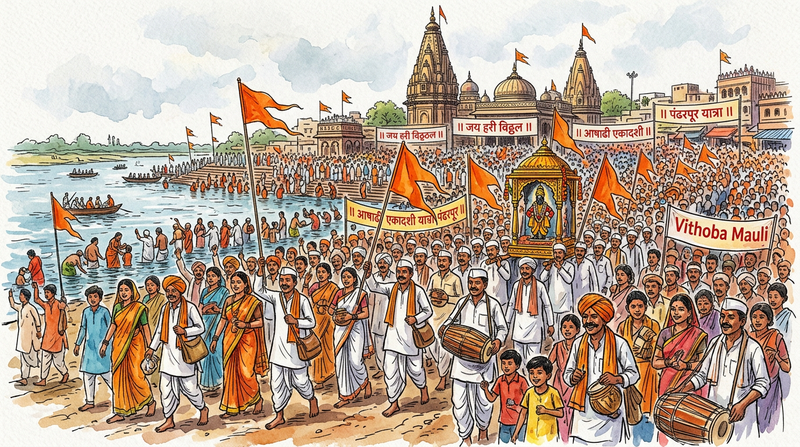
| July 25 | Saturday | Devshayani (Ashadhi) Ekadashi | Widely observed; also known as Harishayani Ekadashi (daanyam.com) |
| July 29 | Wednesday | Guru Purnima (Vyasa Purnima) | Across India (Hindu, Jain, Buddhist communities) (img1.wsimg.com) |
| July 30 | Thursday | Shravan begins (in many panchangs) | Marks the start of Shravan observances for many regions (img1.wsimg.com) |
Ashadha amavasya is not the loudest festival on the calendar, but it is one of the most meaningful. Many families keep the day simple: fewer distractions, lighter meals, charity, and remembrance practices for ancestors.
In a month filled with public celebration, amavasya offers a gentle reminder: gratitude is also a ritual.
A sustainable way to observe
Keep the spirit minimal:
- Donate seasonal essentials (umbrellas, dry ration, school supplies).
- Avoid single-use puja items where possible (especially plastic decor in monsoon months).
Jagannath Rath Yatra (July 16, 2026): the chariot festival that pulls everyone in
In 2026, the famous Ratha Yatra of Puri falls on Thursday, July 16.
Even if you’re not in Odisha, many temples and ISKCON communities across India hold processions, kirtans, and special darshan around this date. The visual language of the festival—big chariots, public devotion, shared food—makes it one of the most “collective” celebrations of the year.
If you’re traveling to Puri in July 2026
Plan for monsoon + crowds:
- Carry rain protection that you can reuse (poncho or sturdy umbrella).
- Expect long walking routes and limited phone battery—pack a power bank and keep meeting points fixed.
Karka Sankranti (July 16, 2026): a seasonal milestone for sun, farms, and food
Karka Sankranti (Sun’s transit into Cancer) is widely noted as a significant calendrical turning point, and in 2026 it lands on July 16—the same day as Rath Yatra.
Across regions, Sankranti observances often include:
- sacred bathing (where feasible),
- donations,
- sesame/jaggery-based offerings,
- gratitude for harvest cycles and rainfall rhythms. (shreekundli.com)
Bonalu (late July into August): Telangana’s monsoon devotion in full color
Bonalu is strongly associated with the Ashada month (July/August) and is especially prominent in Hyderabad and Secunderabad. (hyderabad.telangana.gov.in)
In 2026, many local schedules place Bonalu celebrations across multiple Sundays from July 19 onward, extending into early August. (stayvista.com)
Bonalu is also a festival where community, food, and local goddess traditions meet the practical realities of monsoon—health, protection, and collective wellbeing.
Devshayani (Ashadhi) Ekadashi (July 25, 2026): when Chaturmas begins for many devotees
Devshayani Ekadashi is commonly observed as the start of Chaturmas, when many devotees simplify food and routine, and take up focused spiritual practice.
For 2026, several panchang-based calendars place Devshayani Ekadashi on July 25 (Saturday) in India. (daanyam.com)
If you’re new to Ekadashi, the simplest way to participate is not to aim for perfection—aim for intention:
- reduce excess,
- choose satvik food,
- add one small daily practice (reading, japa, seva).
Guru Purnima (July 29, 2026): gratitude, learning, and the lineage of stories
Many Indian calendars place Guru Purnima on Wednesday, July 29, 2026 (with purnima tithi spanning July 28–29 depending on location). (panchang.astrosage.com)
That said, you may also see some online festival lists giving a different date (for example, July 10). This usually happens due to differences in calculation methods and calendar traditions—so it’s worth confirming locally if you’re planning a formal puja. (panchang.org)
A storytelling way to celebrate Guru Purnima (for families)
If you want a simple, warm way to mark the day at home, make it about teachers and life lessons, not only rituals:
- Ask children: “Who is a guru in your life—and why?”
- Share one story about a mentor who changed your direction.
- Write a short gratitude note (even a message counts).
If you’d like a ready listening companion for the day, gaathastory has a dedicated page with a Guru Purnima special featuring stories that honor and celebrate gurus. You can explore it here: Guru Purnima special. (gaathastory.com)
And if you’re building a multilingual listening habit at home (especially with kids), you can also browse the wider Baalgatha podcast collection in multiple Indian languages. (gaathastory.com)
Shravan begins (July 30, 2026): a bridge into the next festival wave
Many calendars mark Shravan starting on July 30, 2026, which means July ends by opening the door to Sawan Somvar fasts, Nag Panchami stories, and a more intense rhythm of monsoon devotion. (img1.wsimg.com)
If you like planning ahead, this is also a good moment to gather reusable puja supplies and keep celebrations low-waste—because August can get busy quickly.